The real estate market in Scenic City has undergone a dramatic shift since the pandemic and this year shows a landscape of rising prices, evolving buyer behavior, plus new opportunities for both buyers and sellers.
Price Surge And Changing Home Size
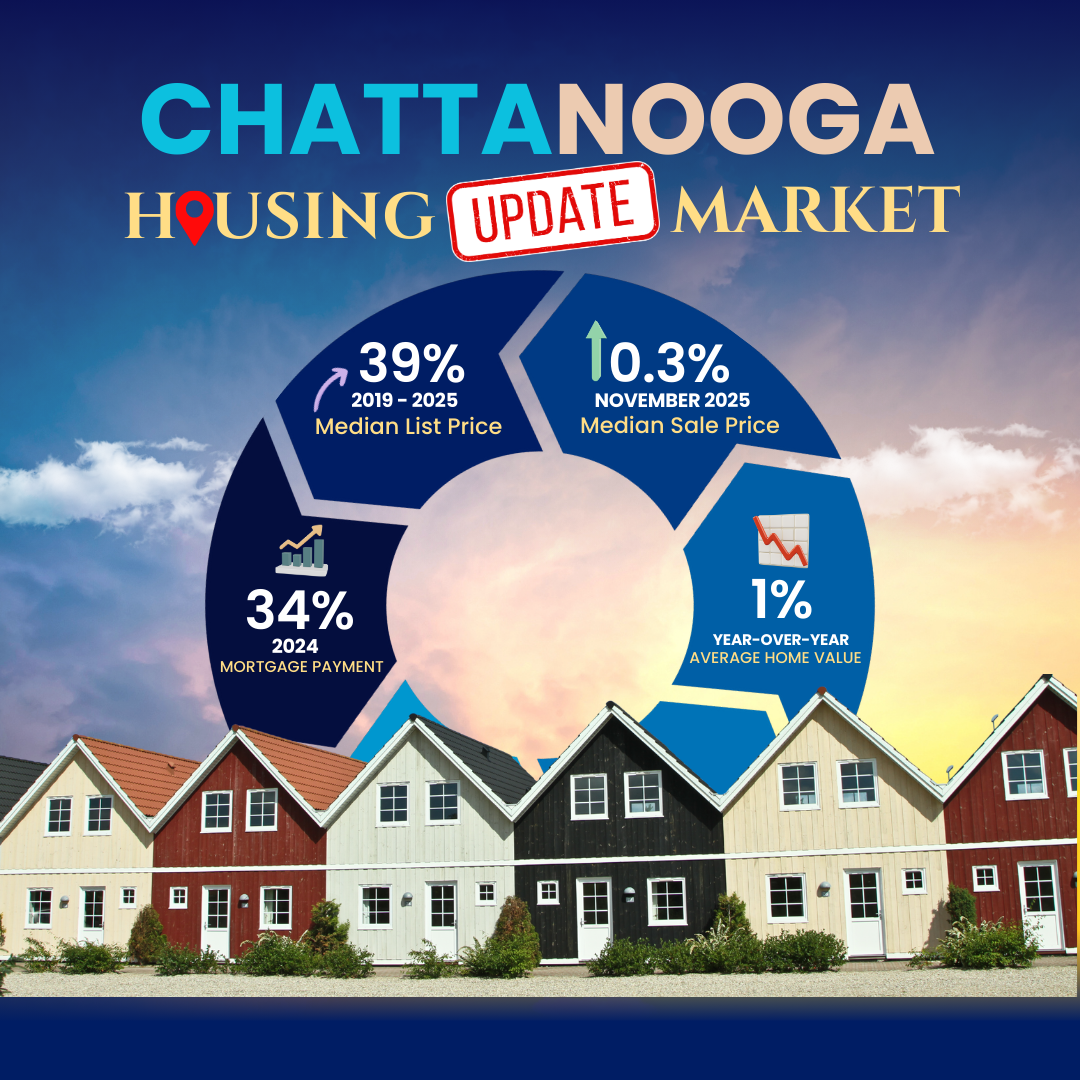
A recent study by University of Tennessee at Chattanooga (UTC) reveals that between 2019 and 2025 the median list price in the metro area leapt by nearly 39%, reaching around $412,450. Meanwhile, the average home size shrank by about 12%, with typical listings shrinking from roughly 2,200 to just under 2,000 square feet. At the same time, local real median household income rose by 13.5% from 2019 to 2024 which is significantly higher than the national increase of 3.9%. These gains have helped cushion some of the financial pressure on buyers.
However, the biggest challenge remains mortgage rates. Rates that dropped below 3% during 2020–2021 surged past 6% by late 2022, doubling many buyers’ monthly payments. As a result, the typical mortgage payment increased from consuming about 24% of household income in 2019 to more than 34% in 2024. For many, the issue now isn’t just home price — it’s the cost of borrowing.
This Year’s Market Update: More Balanced, Slower — But Strategic
As of November 2025, the market is noticeably calmer than the frantic pace seen in previous years. The median sale price across Chattanooga currently sits around $350,000, only slightly up (about 0.3%) compared to last year. Homes are also staying on the market longer: many listings now take 35 to 50 days to sell. According to the Zillow Home Value Index, the average home value is roughly $316,600, reflecting a small dip of less than 1% year-over-year.
This slower pace means more breathing room for buyers. Many are taking the opportunity to prioritize thoughtful home selection, negotiate seller credits, work with local lenders who understand the nuances of the market, and buy under their maximum price threshold to manage higher mortgage rates. Increased inventory which is boosted by new developments in neighborhoods like Southside, East Ridge, and Ooltewah is also giving buyers additional options and flexibility.
For sellers, the advantage persists: most homes still sell for about 98% of asking price. Yet success now depends less on overpricing or market frenzy and more on smart pricing, good presentation, curb appeal, and honest evaluations based on neighborhood and condition rather than over-optimistic online estimates.